 Go back
Trends of the Russian logistics market in 2023

Today, Russian logistics, like many other areas of business, is actively changing. All processes are being improved and optimized, new technologies, new partners and new horizons are opening. Let us highlight a few key trends in the development of Russian supply chains that will affect our work during this year.
In order to do this, we will start from the statistics of the volume of transported cargo and the factors affecting these processes. The charts (source: infranews.ru) show a decline in transportation volumes in recent years. We have been talking about this for a long time. And, to all appearances, this trend will continue for several more years. We can also see that the fluctuations in transportation volumes have a zigzag character. This indicates a strong dependence on external and internal unstable influences.
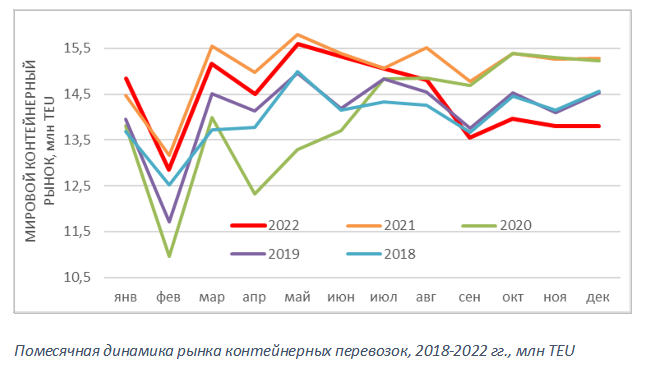
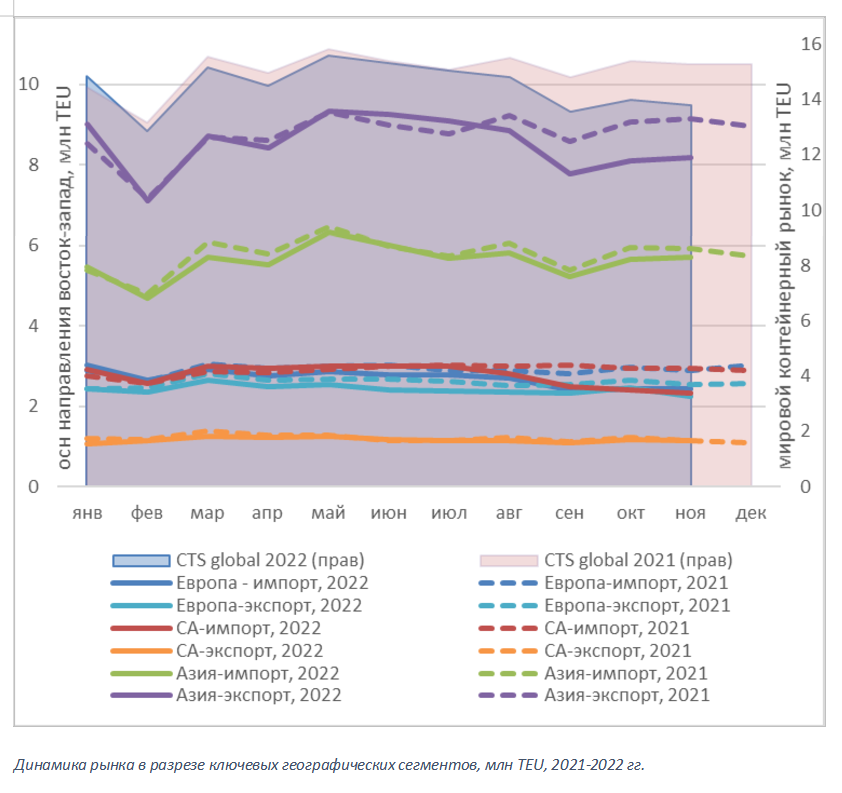
Let's look at what trends can be highlighted:
1) New routes
New is most often the long forgotten old. Changes in the geopolitical situation, sanctions, quarantine measures, congestion of cargo, increased delivery time. All this forced transportation companies to work out new routes or restore those routes, which in another situation would hardly be remembered. What can be noted? - Delivery within the North-South corridor and along the Trans-Caspian route, via Azerbaijan, Kazakhstan, Turkmenistan. - Cargo transportation from China via Blagoveshchensk, Vladivostok, Naushki, Grodekovo, through Kazakhstani border crossings Dostyk and Altynkol. Some routes were used before, but the volumes were smaller. - Delivery by various means of transportation through Turkey, Georgia, Iran, Azerbaijan, Belarus, Kazakhstan, Tajikistan, sea transportation from Russian ports to India, China, Turkey, UAE, Vietnam and in the opposite direction has grown actively. Active use of the NSR is expected. The trend for new routes is gaining momentum and will expand. Some of them will remain and strengthen, others will not pass the test of time. New options will also appear. The changing geography of transportation along the chain leads to a whole range of other changes. It is necessary to improve infrastructure at border crossings, expand and maintain railroads and roads, and open new terminals and warehouses. Optimization of work at all docking crossings. Many things are starting to be actively built and existing facilities are being finalized. The sooner they are put into operation, the sooner the results will be achieved.
2) Optimization of related logistics processes
A successful supply chain depends on a large number of complementary factors. There are a number of trends that affect the logistic result today:
- There is a renewal of truck transportation, other components and related equipment, and manufacturers from Asian and other countries are coming in. And consequently, there is a restructuring of the market and infrastructure for this type of transportation and goods.
- Simplification of international document flow towards seamless border crossing. Minimization of bureaucratic delays. Reforming border crossings and customs mechanisms. China, Kyrgyzstan, Kazakhstan, Georgia and other countries are now cooperating closely on these issues. I would like to see this trend in Russia as well.
- Settlements in a convenient currency. When cooperating with friendly and neutral countries, Russian companies are moving away from settlements in dollars. This is only the beginning, the vector of change has been set in the right direction. Already now it is possible to establish processes and organize currency transactions in the most efficient way. It is also possible to develop general principles of currency transactions and subsequent conversion. It is important to properly formalize the approval of these operations to avoid the impossibility of spending excess currency, and to qualitatively adjust the system of payment transfer.
3) Change in freight traffic
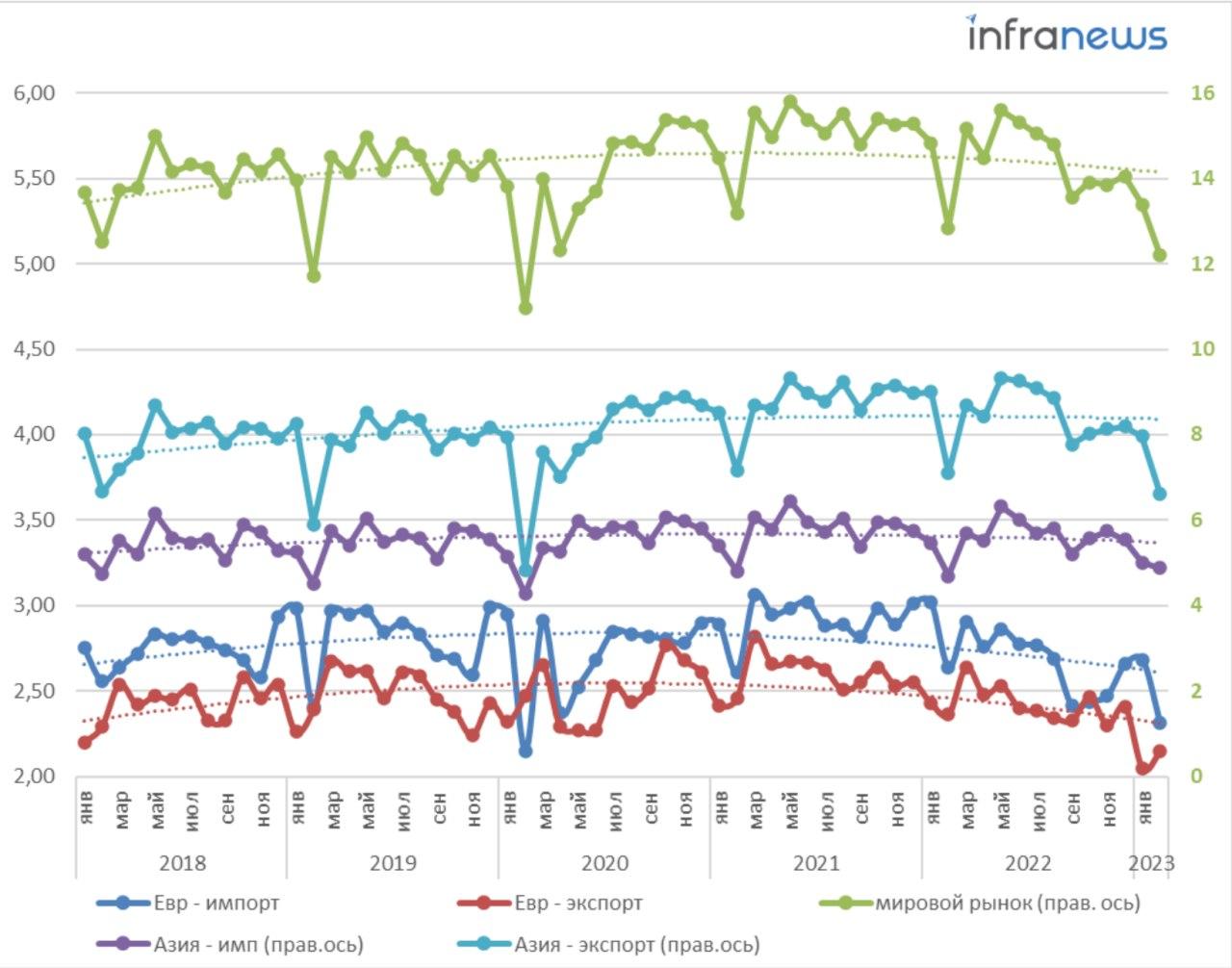
The change in traffic volumes should be singled out as a separate trend. In general, there is a downward, zigzag dynamics (on the chart: Comparative dynamics of the world container market volumes and some individual segments, mln TEU. Source: infranews.ru). This is due to the fact that there will be no economic growth in the next few years. And without economic growth it is impossible to increase shipment volumes. Geopolitical tension will persist. And even after the conflicts are over, we will reap their benefits for many years. The zigzag curve is characterized by dependence on sanctions and domestic political events. Consequently, it is not worth expecting an upturn in freight transportation in the coming years. Now the trend to split volumes and the growing popularity of prefabricated cargoes is gaining momentum. This is due to the inability to plan demand (for obvious reasons). No one takes the risk of transporting large batches of goods, as there are great risks that it will get stuck in warehouses and “bog down” in costs. As a consequence, this will lead to an increase in cost and inability to sell the products. Therefore, high speed of accumulation of small cargoes and their distribution will remain in demand. Dimensional logistics will be concentrated mainly among companies working for government needs. Therefore, short-term planning and multifactor analysis of demand are now a priority. Companies that know how to do this will be able to provide customers with competitive offers. And they will be the “strongest” that will survive and remain on the market.
4) Rates
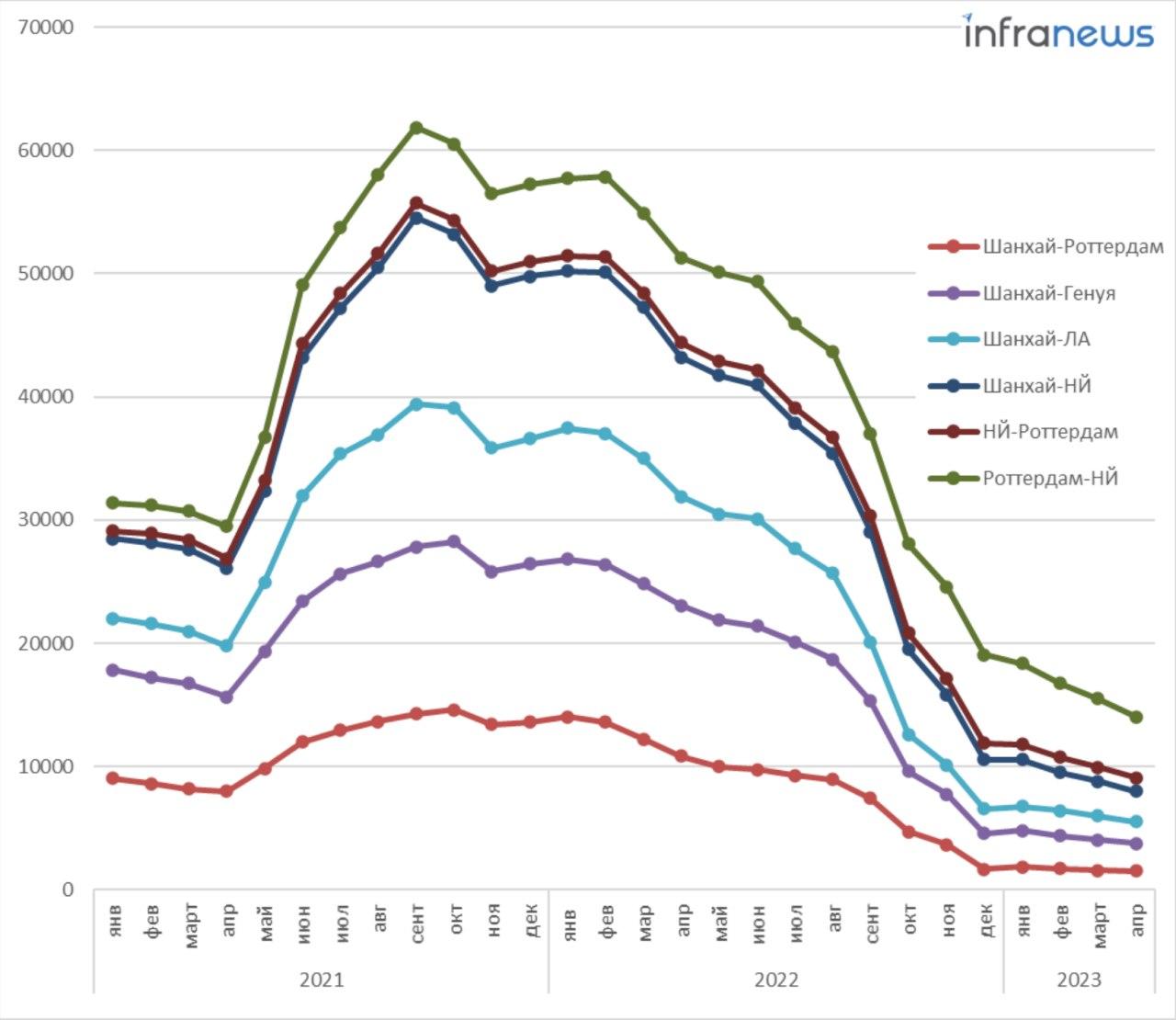
There is a decrease in rates with stabilization of prices for transportation. Prices for transportation remain high, although they are gradually approaching the pre-pandemic level (on the chart: dynamics of spot rates, Drewry WCI, $/FEU. Source: infranews.ru). The decline will continue. We hope that it will be reflected in the final cost of transportation (suppliers are usually reluctant to inform customers about the reduction of the total cost of the entire cargo delivery chain). The margins of forwarding companies today are minimal, all the “cream” has been and is being skimmed off by monopolists. In the current extremely difficult conditions, the cost of forwarding services should correspond to labor costs, which have obviously become higher. The professionalism of logistics services should be evaluated accordingly. But the current rates are too high for this to be possible. But if the rates are lowered, it will be quite realistic for freight forwarders to receive decent pay for their labor.
5) Business
Small businesses are in a disadvantaged position. To survive in the market, small logistics companies often work to their own detriment. They end up closing down, going bankrupt, or being sold to large companies. Large companies take over entire market segments and dictate their terms as a monopoly. In order to preserve market relations, competitive environment, and jobs, it is important to maintain the trend of strengthening the positions of existing market players. For example, when major foreign players left the sea, the freed volumes were divided among small carriers. It was worth supporting them at the state level, it would have served the healthy development of the industry. - Vertical integration of business. Large production companies acquire their own transportation, build warehouses, open trade areas, and develop production facilities. Thus, they fully meet their needs at all stages of the supply chain. We noted this trend last year, and the movement in this direction continues.
6) Service
Service is changing towards integrated service delivery. Now, the principle of one-stop-shop is not only that one company can order transportation to any point. A demand for a full range of logistics services is being formed: warehousing, forwarding, dealer services, etc. The offer of such services will increase, new 5,6,7 PL operators will appear. At the same time, it should be noted that the quality of logistics services is not increasing. This is due to many difficulties arising in the planning and implementation of transportation. And there are complexities at all stages - from the execution of documents to the formation of the shipment of trains and ships.
7) People
The increased importance and value of professional staff today can be recognized as a separate trend. A few years ago, everything worked according to a well-established scheme, and many cargo delivery processes did not require active support by human resources. Now almost every delivery involves the need to solve non-standard tasks. This requires specific skills from qualified employees. Accordingly, there will be a growing need for high- and mid-level specialists. This requires training costs and appropriate remuneration. Since changes in the market occur daily and unpredictably, there is a growing need not just for specialists with specialized education. There is a demand for employees who are able to:
- learn independently,
- make decisions,
- communicate with customers and suppliers, - exchange data with colleagues, - work effectively in a team,
- navigate a sea of necessary and unnecessary information,
- isolate necessary, important and valuable information and use it competently in their work.
8) Digitalization and technology development
Logistics is moving towards optimizing the delivery and processing of goods. Therefore, digitalization can be identified as a separate trend. By digitalization we mean the connection of all links and participants of the supply chain in a common software product. This is a complex process, and it contains many serious risks. We will have to correct their consequences if we do not think through everything in advance.
The goals of digitalization of today's logistics:
- Integration of logistics solutions;
- variability of routes;
- interconnection of freight flows;
- interconnecting suppliers;
- unification of customers;
- document consolidation;
- consolidation of data on rates, volumes, resources, routes, suppliers, customers, transportation and personnel.
- Maximize drill-down reports on finance, freight, customers, suppliers, routes, and employees.
What are the challenges of this process:
- owners are not willing to share information;
- “raw” software; - insecure data storage; - lack of redundant data storage systems;
- a desire to make the final software “run ahead of the locomotive”.
Digitalization as a tool can be useful and promising. But at this stage, attempts to implement it look very unprofessional. In this form, there are more disadvantages than advantages.
9) Instability
It is worth noting separately the trend towards instability in the world. The preconditions for this were there before the pandemic, as the ever-growing market had to burst at some point. The results are seen in quarantine measures, sanctions restrictions, geopolitical agendas and imbalances within countries. All areas of life are affected, including logistics. Difficulties arise in production planning, as the demand is not clear. And it, in turn, depends on the well-being of people, states and the vector of consumption of goods. Today there is no possibility of stable transportation, as each stage of delivery is accompanied by the solution of various, constantly arising tasks. This disrupts all processes in all links of the cargo supply chain. Instability in people's heads generates instability in their thinking, which leads to unjustified risky actions. Therefore, it is important to adequately and multifactorily assess each step, make balanced decisions, realizing the instability of the situation in the world and its possible consequences.